

For principals and school trustees across India, delayed fee collection remains one of the most persistent operational challenges. Late payments disrupt cash flow, complicate budgeting, and create unnecessary administrative burden. In 2026, as Indian schools embrace digital transformation aligned with NEP 2020 guidelines, automated School ERP systems are emerging as the definitive solution to this age-old problem.
The Real Cost of Fee Collection Delays in Indian Schools
Fee collection delays create a domino effect across school operations. When payments arrive late, schools struggle to meet payroll obligations, vendor commitments, and infrastructure investments on time. According to recent surveys of Indian private schools, nearly 40% of institutions report that late fee collection significantly impacts their operational planning.
For trustees managing multi-branch school networks or principals overseeing budget-intensive CBSE and ICSE curriculum implementations, these delays translate into real financial stress. Manual reminder calls, physical follow-ups, and paper receipt reconciliation consume valuable staff hours that could be redirected toward educational excellence.
The traditional fee collection model, characterized by cash transactions, physical receipts, and manual tracking, is simply incompatible with the demands of modern school management. Parents expect convenience, transparency expects accountability, and regulatory compliance under NEP 2020 demands accurate financial documentation.
How Automated School ERP Systems Transform Fee Collection
A comprehensive School ERP system revolutionizes fee management through intelligent automation that addresses every stage of the collection cycle. Unlike standalone fee software, integrated ERP platforms connect fee collection with admission management, student records, and financial reporting, creating a seamless operational ecosystem.
Modern fee management modules within School ERP software automate payment reminders through multiple channels. Parents receive timely notifications via SMS, email, and mobile app push notifications before due dates. These automated reminders reduce the administrative burden on office staff while ensuring parents never miss payment deadlines due to oversight.
Digital payment integration represents another transformative feature. When schools implement cloud-based School ERP systems, they enable parents to pay fees through UPI, net banking, debit cards, credit cards, and digital wallets, all from a single unified platform. This convenience dramatically improves collection rates, with many Indian schools reporting 30-40% reductions in overdue payments within the first quarter of ERP implementation.
Automated receipt generation eliminates one of the most time-consuming aspects of manual fee collection. Every transaction generates an instant digital receipt, automatically recorded in both the parent’s account and the school’s financial ledger. This dual recording ensures complete transparency and simplifies year-end audits required for CBSE and ICSE affiliation compliance.
Real-Time Payment Tracking and Reporting
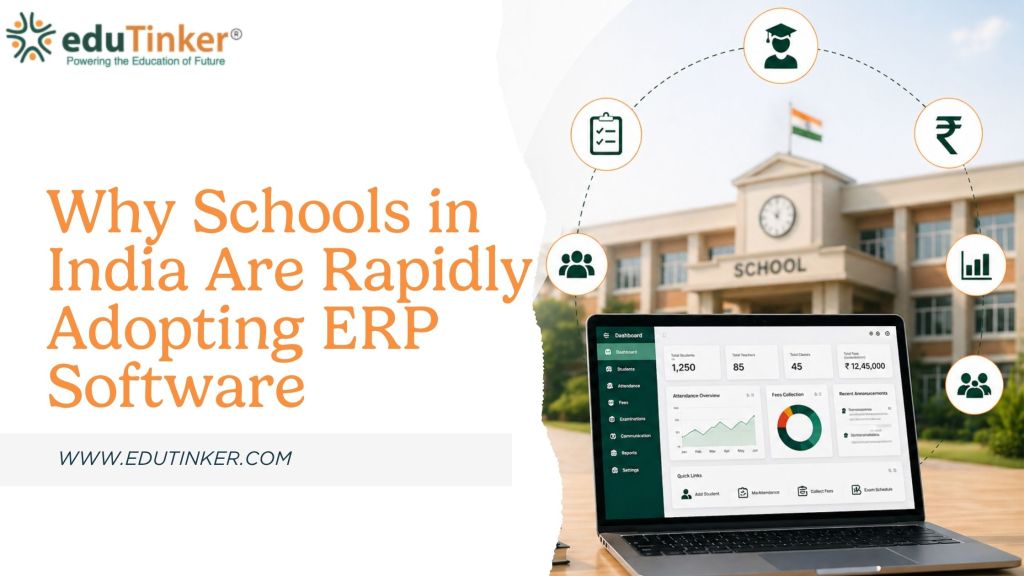
One of the most powerful advantages of automated School ERP systems is real-time visibility into fee collection status. Principals and administrators can access comprehensive dashboards showing exactly which students have paid, which payments are pending, and which accounts require immediate attention.
This 360-degree analytics capability enables data-driven decision making. Instead of waiting for monthly accounting reports, school leadership can monitor collection trends daily. When payment patterns change, perhaps indicating parent financial stress in specific grade levels, administrators can respond proactively with flexible payment plans or targeted communication.
For schools operating across multiple locations, centralized fee management through cloud-based ERP systems ensures consistent policies and consolidated reporting. Trustees can monitor collection performance across all branches from a single interface, identifying best practices and addressing challenges systematically.
NEP 2020 Compliance and Financial Transparency
The National Education Policy 2020 emphasizes transparency, accountability, and technology integration across Indian education institutions. Automated fee management directly supports these objectives by creating auditable financial records that satisfy regulatory requirements.
School ERP systems maintain complete transaction histories with timestamps, payment methods, and receipt numbers, essential documentation for CBSE inspection reports and ICSE compliance audits. When education authorities request financial verification, schools can generate comprehensive reports instantly rather than compiling data manually over days or weeks.
This enhanced transparency also builds trust with parents. When families can access their complete payment history, view pending amounts, and download receipts independently through parent portals, it reduces disputes and strengthens the school-home partnership.
Customizable Fee Structures for Diverse School Needs
Indian schools operate with remarkably diverse fee structures, from quarterly instalments to monthly payments, sibling discounts to scholarship adjustments, transport fees to activity charges. Generic software solutions struggle with this complexity, but comprehensive School Management Systems accommodate it effortlessly.
Automated ERP platforms allow administrators to configure fee structures precisely matching their institutional requirements. Whether managing complex CBSE board exam fees, ICSE practical examination charges, or NEP 2020-aligned skill development program costs, the system calculates amounts accurately and applies them consistently.
Sibling discounts, early payment incentives, and need-based fee waivers can all be programmed into the system, ensuring eligible students receive appropriate adjustments automatically. This automation eliminates human error and ensures fair, consistent application of school policies.
Integration with Admission and Student Management
The true power of School ERP systems emerges through integration. When fee management connects seamlessly with admission management and student information systems, schools achieve unprecedented operational efficiency.
New admissions flow directly into the fee system, with first-term fees automatically calculated based on selected grade levels and optional services. As students progress through grades, fee structures update automatically, eliminating manual data entry and the errors it introduces.
This integration also enables sophisticated analytics. Schools can correlate fee collection patterns with admission sources, grade levels, or geographic locations, insights that inform strategic enrolment and retention planning.
Mobile Accessibility for Parents and Administrators
In 2026, mobile-first design is essential for any school software deployment in India. Parents increasingly expect to manage educational expenses through smartphones, just as they handle other financial transactions.
Modern School ERP systems provide dedicated mobile applications where parents can view outstanding fees, make payments, download receipts, and communicate with the accounts office, all from their devices. This accessibility dramatically improves collection rates, particularly among working parents who appreciate the flexibility of paying during commute hours or lunch breaks.
Administrators benefit equally from mobile access. Principals can monitor collection dashboards during meetings, approve fee waivers while traveling, and respond to urgent payment queries without returning to the office. This flexibility supports agile decision-making and responsive school leadership.
Reducing Administrative Workload and Operational Costs
Staff time represents one of the largest operational expenses for any school. When account office employees spend hours each day generating receipts, making reminder calls, and reconciling cash collections, those labor costs accumulate significantly.
Automated fee collection through School ERP systems redirects this effort toward more strategic activities. Instead of chasing payments, staff can focus on financial planning, scholarship program management, or building stronger relationships with parent communities.
The reduction in paper consumption, printing costs, and physical storage requirements adds further savings. Digital records eliminate the need for filing cabinets, physical receipt books, and extensive storage space, resources that can be repurposed for educational use.
Security and Data Protection
Financial transactions require the highest levels of data security. Reputable School ERP providers implement bank-grade encryption, secure payment gateways, and comprehensive data backup protocols that protect sensitive financial information.
For schools managing hundreds or thousands of student accounts, this professional-grade security infrastructure would be prohibitively expensive to develop independently. Cloud-based ERP systems deliver enterprise-level protection at accessible price points, ensuring even smaller institutions can offer secure digital payment options.
Regular automatic backups protect against data loss, while role-based access controls ensure only authorized personnel can view or modify financial records. These safeguards satisfy both internal governance requirements and external compliance obligations under data protection regulations.
Implementing Automated Fee Collection: Practical Considerations
Successful ERP implementation requires careful planning and stakeholder engagement. Schools should begin by documenting current fee structures, payment policies, and collection workflows. This assessment identifies specific requirements the new system must accommodate.
Training represents another critical success factor. Administrative staff, account office personnel, and even principals need thorough training on system capabilities and best practices. Leading ERP providers offer comprehensive onboarding support, including hands-on training sessions and ongoing technical assistance.
Parent communication during the transition period determines adoption rates. Schools should proactively explain new payment options, demonstrate mobile app features, and provide multiple support channels for parents adjusting to digital payment methods. This investment in change management typically pays dividends through faster adoption and smoother implementation.
The Future of Fee Management in Indian Schools
As India’s education sector continues its digital transformation journey, automated fee collection will transition from competitive advantage to baseline expectation. Parents increasingly expect the same digital convenience from schools that they experience in other service sectors.
Schools investing in comprehensive School ERP systems position themselves strategically for this future. Beyond addressing immediate fee collection challenges, these platforms provide the foundation for advanced analytics, artificial intelligence-driven financial forecasting, and seamless integration with emerging educational technologies.
For principals committed to operational excellence and trustees focused on sustainable growth, automated fee management through School ERP systems represents not just a solution to current challenges but an investment in long-term institutional capacity.
Conclusion
Fee collection delays undermine financial stability, consume administrative resources, and create unnecessary friction with parent communities. In 2026, Indian schools have access to sophisticated School ERP systems that transform fee management from a persistent problem into a smoothly automated process.
Through intelligent payment reminders, multiple digital payment options, real-time tracking, and seamless integration with broader school operations, these systems address the root causes of collection delays while enhancing transparency and parent satisfaction.
For Indian schools navigating NEP 2020 implementation, CBSE and ICSE compliance requirements, and growing parent expectations, investing in automated fee collection through comprehensive School Management Systems is no longer optional, it is essential for sustainable operations and educational excellence.
Platforms like Edutinker combine powerful fee management with admission automation, student information systems, and data analytics, providing Indian schools with the integrated tools they need to thrive in an increasingly digital educational landscape