

The Gap Between Teaching and Knowing
In most Indian schools, teachers work incredibly hard. They prepare lessons, deliver content, conduct assessments, and manage classrooms of 40 or more students. Yet despite all this effort, a consistent problem remains: teachers often do not know how each student is progressing until the end of term report cards come out, by which point it is too late to intervene effectively.
This lag between teaching and knowing is one of the root causes of underperformance in Indian schools. A student who struggles with algebra in August may fall three chapters behind by October. However, without a system to flag this early, neither the teacher nor the parents are aware until the terminal examination reveals the damage.
Real-time student performance tracking changes this dynamic entirely, and in 2026, the tools to do this are accessible to every Indian school, from small-town single-campus institutions to large urban chains.
What Real-Time Performance Tracking Actually Looks Like
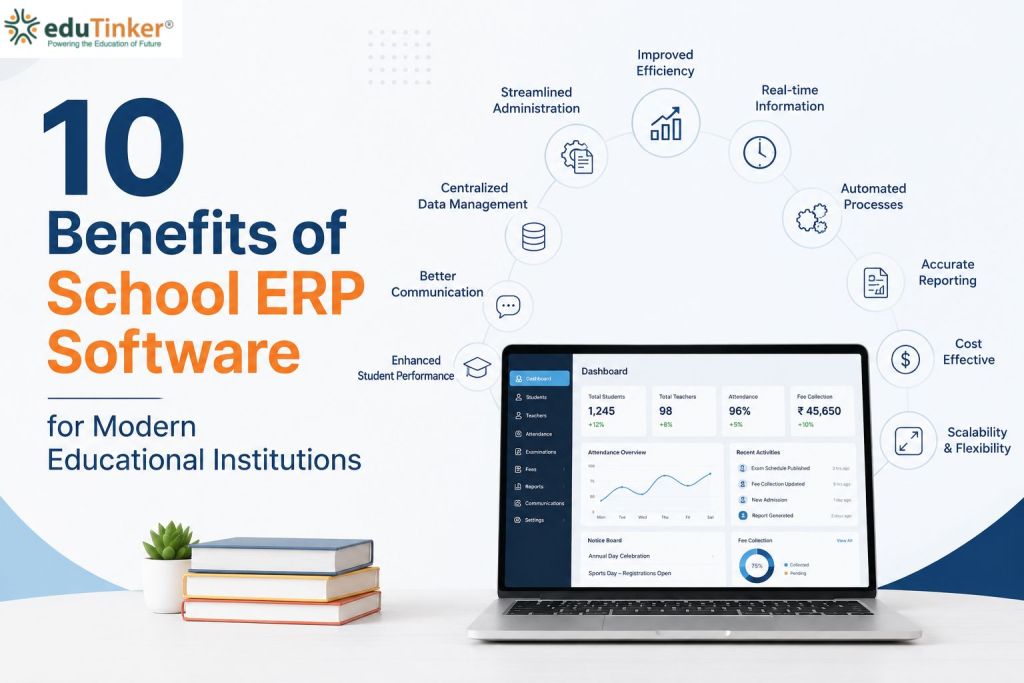
Let us be specific about what this means in practice. A real-time performance tracking system captures data from multiple sources: class assessments, homework submissions, quiz scores, attendance patterns, and teacher observations. It aggregates this data automatically and presents it in a dashboard that teachers, parents, and principals can access from their phones.
Therefore, a maths teacher can see at a glance which of her 38 students scored below 40 percent on the last three unit tests. She can filter by topic to see whether the problem is fractions specifically or a broader numeracy issue. She can then plan a targeted intervention session rather than reteaching the entire chapter to everyone.
Similarly, a parent receives a weekly update showing their child’s attendance, recent assessment scores, and homework completion rate. Consequently, they are partners in their child’s progress, not recipients of a surprise report card every few months.
The Role of School Analytics in Academic Leadership
For principals and trustees, student performance data at the class and school level is equally valuable. In 2026, the best-performing Indian schools are those led by principals who make data-driven decisions rather than relying exclusively on intuition and experience.
School analytics show you which teachers are achieving the best learning outcomes with comparable student groups. They reveal which classes consistently underperform in specific subjects. Moreover, they help you identify systemic issues, like a curriculum gap, a staffing problem, or a resource deficit, before they become serious.
This is the difference between reactive school management and proactive academic leadership. And that difference, compounded over multiple academic years, translates into measurably better results for students and a stronger reputation for your institution.
Making Performance Data Useful for Teachers
A common mistake is investing in analytics tools and then expecting teachers to become data analysts. This does not work. Teachers are educators, not statisticians. Therefore, the best student performance tracking systems are designed to surface insights automatically and present them in a format that requires no technical expertise to understand.
When a system tells a teacher, in plain language, that three students in her class have missed more than 30 percent of homework in the past two weeks, she can act on that immediately. She does not need to run a query or interpret a graph. The insight is direct and actionable.
Furthermore, when teachers see that the data they enter is actually used, that it leads to principal support, parent communication, and student outcomes, they become far more consistent about entering it in the first place. This virtuous cycle is what makes well-implemented school management systems genuinely effective.
Privacy and Responsible Use of Student Data in India
As Indian schools collect more data about students, questions of privacy and responsible use become important. Parents and students have a reasonable expectation that personal academic data will not be misused or shared without consent. Trustees should ensure that any school management platform they use complies with applicable Indian data protection guidelines and stores data securely within India where possible.
Additionally, it is important to use performance data to support students, not to label or limit them. A student who struggles in one term deserves the benefit of early intervention, not a permanent record that follows them through school. Train your staff to use data as a tool for support, not judgment.
Conclusion: Data Is Not the Enemy of Good Teaching, It Is Its Best Ally
The most effective teachers in Indian schools in 2026 are not those who work the hardest in isolation. They are those who have the clearest picture of where each student stands and what each student needs. Real-time performance tracking gives every teacher that picture, regardless of class size or school resources.
For school principals and trustees, investing in student performance tracking is not about surveillance or control. It is about giving your teaching team the tools they need to do their jobs better. And ultimately, it is about giving every Indian student a fair shot at reaching their potential, which is, after all, why schools exist.