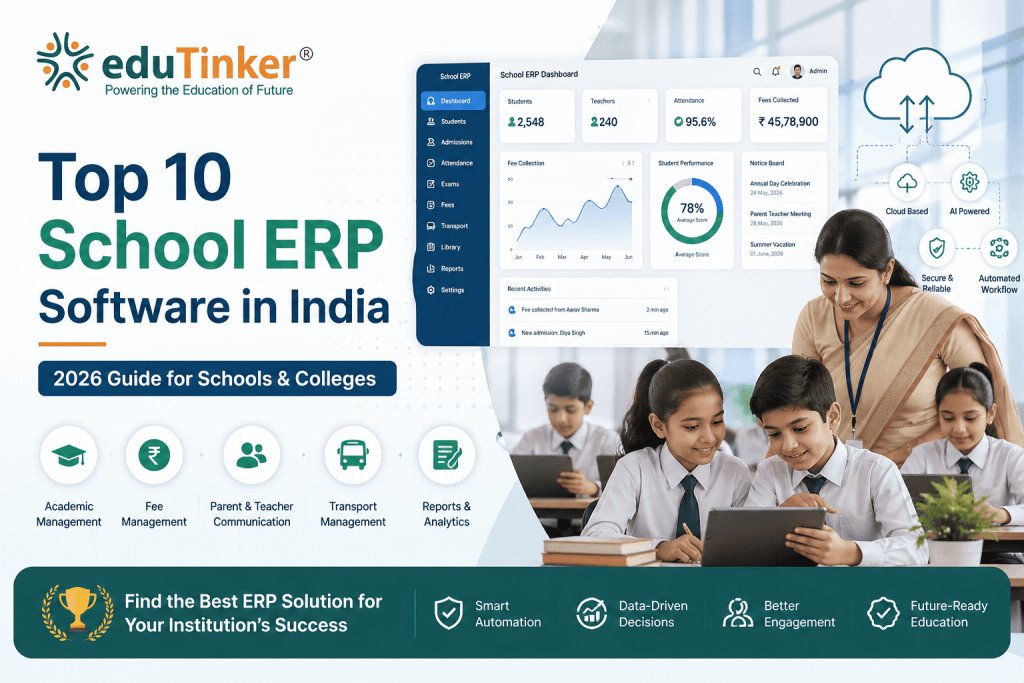


College admissions today operate in an environment where students expect quick responses, personalized guidance, and seamless digital experiences. For admission teams, this means managing vast amounts of inquiries, communication rounds, application documents, and evaluation processes—all while ensuring transparency and efficiency. Traditionally, CRMs were adopted simply to collect leads and remind counselors about follow-ups. But modern higher-education CRMs like eduTinker go far beyond these basic functions.
A CRM is no longer just a tool for lead storage; it is a decision-making engine, a communication hub, and a workflow automation system that transforms the entire admissions lifecycle. Here is why today’s admission teams cannot afford to rely on outdated systems or manual processes.
1. A CRM Brings Complete Visibility into the Admission Pipeline
Lead capture and follow-ups are only the first steps. Colleges need clarity on where each inquiry stands, what actions have been taken, and how effectively teams are engaging students. A modern CRM gives admissions teams:
- A real-time dashboard of inquiries, applications, and enrollments
- Stage-wise student tracking from first touch to final admission
- Insights into counselor activity, response times, and performance
This visibility eliminates guesswork and ensures that team leaders can identify bottlenecks early—whether it’s a delay in document verification, slow follow-ups, or low application conversions from specific campaigns. With accurate data at every step, admissions become predictable rather than chaotic.
2. Automates Time-Consuming Administrative Tasks
Admissions typically involve repetitive administrative tasks such as data entry, updating student details, reconciling documents, scheduling campus visits, and marking attendance for admission events. This consumes countless working hours that could otherwise be invested in meaningful counseling.
A CRM automates these processes through workflows based on predefined rules. For example:
- Automatically assigning leads to counselors
- Sending instant acknowledgement messages to new inquiries
- Triggering reminders for missing documents
- Updating student status based on actions taken
- Generating counsellor task lists for each day
With automation, admission teams drastically reduce errors, speed up processing, and maintain consistency in communication.
3. Enables Personalized Engagement at Scale
Today’s students expect personalized experiences—not generic prospectus emails. A CRM allows institutions to tailor communication based on student preferences, academic interests, location, demographics, or previous interactions.
With eduTinker CRM, colleges can:
- Send program-specific messages to interested students
- Offer personalized course recommendations
- Notify students about scholarships relevant to their profile
- Share reminders based on their stage in the journey
This level of personalization makes students feel valued and increases their likelihood of choosing the institution.
4. Makes Communication Seamless Across Multiple Channels
Admission teams juggle communication across phone calls, WhatsApp, email, SMS, chatbots, and social media. Without a central system, messages get lost, duplicated, or mismanaged.
A CRM centralizes all communication so counselors never miss a conversation. Every message sent or received is tracked under the student profile, ensuring continuity even if a counselor is unavailable or the team changes.
Multi-channel communication also helps teams reach students where they’re most active, increasing engagement and response rates.
5. Provides Actionable Insights for Improving Conversions
One of the biggest advantages of a CRM is its ability to transform data into actionable insights. Instead of relying on guesswork, admission teams can make informed decisions by analyzing:
- Which marketing campaigns bring the highest conversions
- How quickly counselors respond to new leads
- The stages where students commonly drop off
- The conversion rate of each counselor
- Which programs attract maximum inquiries
These insights help colleges refine their communication strategies, allocate budgets smartly, and improve performance across the admission cycle.
6. Simplifies Document Management and Verification
During peak admission season, managing thousands of documents—ID proofs, grade sheets, certificates, and application forms—becomes overwhelming. Manual filing or email-based collection leads to misplaced documents and delays.
A CRM provides a centralized digital repository where:
- Students can upload documents directly
- Counselors can verify submissions in real time
- Automated reminders notify students of pending uploads
- Administrators can download documents anytime for audits
This makes the admission process transparent, secure, and compliant with institutional guidelines.
7. Enhances Collaboration Across Teams
Admissions is not the responsibility of a single counselor. Faculty reviewers, finance departments, department heads, and administrators often play significant roles. Without coordination, decisions get delayed or miscommunicated.
A CRM simplifies collaboration by enabling:
- Shared access to student profiles
- Notes and comments across departments
- Centralized updates on application status
- Workflow routing for approvals
Everyone stays aligned, and turnaround times reduce significantly.
8. Improves Student Experience and Trust
The student experience during admissions heavily influences their perception of the institution. Delayed responses, unclear procedures, and inconsistent communication can push students towards other colleges.
A CRM-powered process ensures:
- Quick, consistent communication
- Transparent status updates
- Easy document submission
- Personalized guidance
- Smooth onboarding post-admission
A positive experience builds trust and encourages students to complete their admission journey confidently.
9. Supports Long-Term Engagement Beyond Admissions
A modern CRM supports more than just the admission cycle. It helps colleges build long-term relationships with students by enabling:
- Orientation communication
- Fee reminders
- Announcements and academic updates
- Alumni coordination in later years
By integrating CRM with academic management tools like eduTinker’s ERP and LMS, colleges can maintain seamless interactions with students throughout their academic journey.
Conclusion: Admissions Need More Than Lead Tracking—They Need an Integrated CRM Solution
With increasing competition, rising student expectations, and expanding digital channels, colleges need more than basic lead management tools. A CRM like eduTinker becomes the backbone of admissions—enhancing productivity, improving engagement, and enabling data-driven decision-making.
It empowers teams to move beyond simple follow-ups and adopt a structured, efficient, student-friendly admission process. For institutions aiming to boost conversions, personalize experiences, and streamline operations, adopting a modern CRM is no longer optional—it is essential.