
The education sector in India is undergoing a significant digital transformation. Schools are no longer relying solely on manual processes, paper records, and fragmented systems to manage daily operations. Today, institutions are embracing modern technologies such as Artificial Intelligence (AI), cloud platforms, and integrated School ERP solutions to create efficient, transparent, and smarter learning environments.
As education evolves, the future of School Management Systems in India is expected to be driven by intelligent automation, connected learning platforms, and data-driven decision-making. Schools are increasingly adopting advanced digital tools to simplify administrative tasks, streamline school admissions in India, improve communication, and enhance the overall academic experience.
In this blog, we explore how AI-powered ERP platforms and smart technologies are shaping the next generation of school management systems.
The Growing Need for Smart School Management Systems
Managing a school involves handling numerous responsibilities—from admissions and attendance to academic planning and financial management. Traditionally, these tasks required multiple disconnected tools or manual paperwork, which often led to inefficiencies and errors.
With the increasing demand for transparency, efficiency, and digital accessibility, schools are now investing in School Management Software that can integrate all these functions into one unified platform.
Modern schools require systems that can:
- Simplify administrative operations
- Improve communication between teachers, parents, and administrators
- Automate student data management
- Streamline school admissions in India
- Support online learning and digital classrooms
This is where the best school software in India is making a meaningful impact by bringing together administration, academics, and communication in one centralized digital ecosystem.
Role of ERP Platforms in Modern School Management
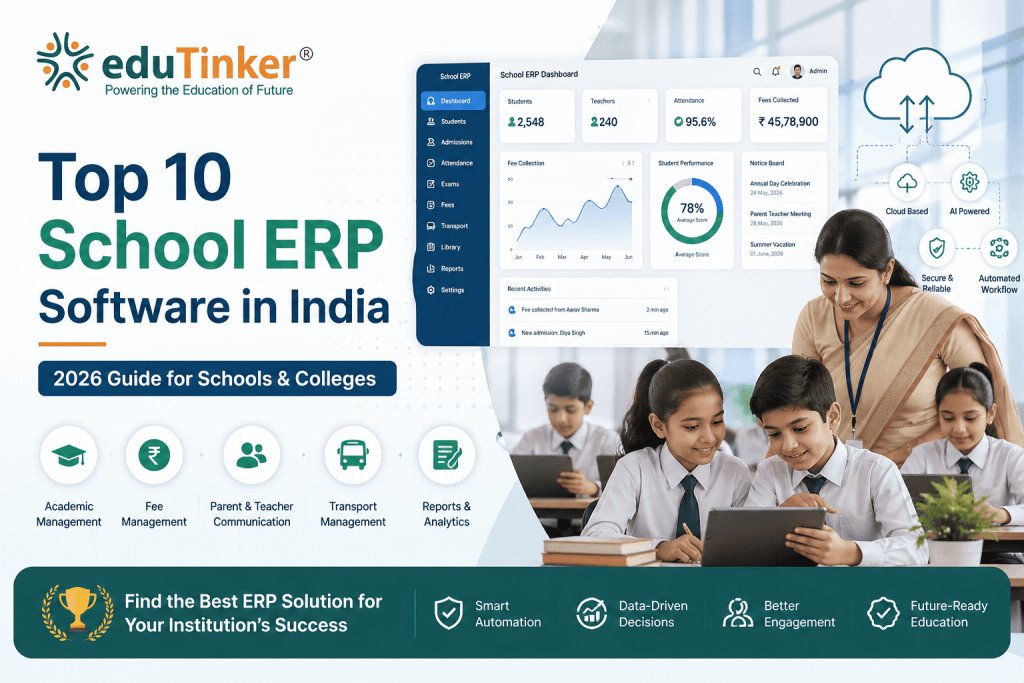
Enterprise Resource Planning (ERP) systems have become the backbone of modern educational institutions. A robust ERP platform in India for schools helps integrate multiple school functions into a single system, enabling administrators to manage operations efficiently.
A well-designed School Management Software typically includes modules such as:
- Student information management
- Admission and enrollment systems
- Attendance tracking
- Fee management
- Examination and grading systems
- Parent-teacher communication portals
These features allow schools to reduce manual workload and improve operational accuracy.
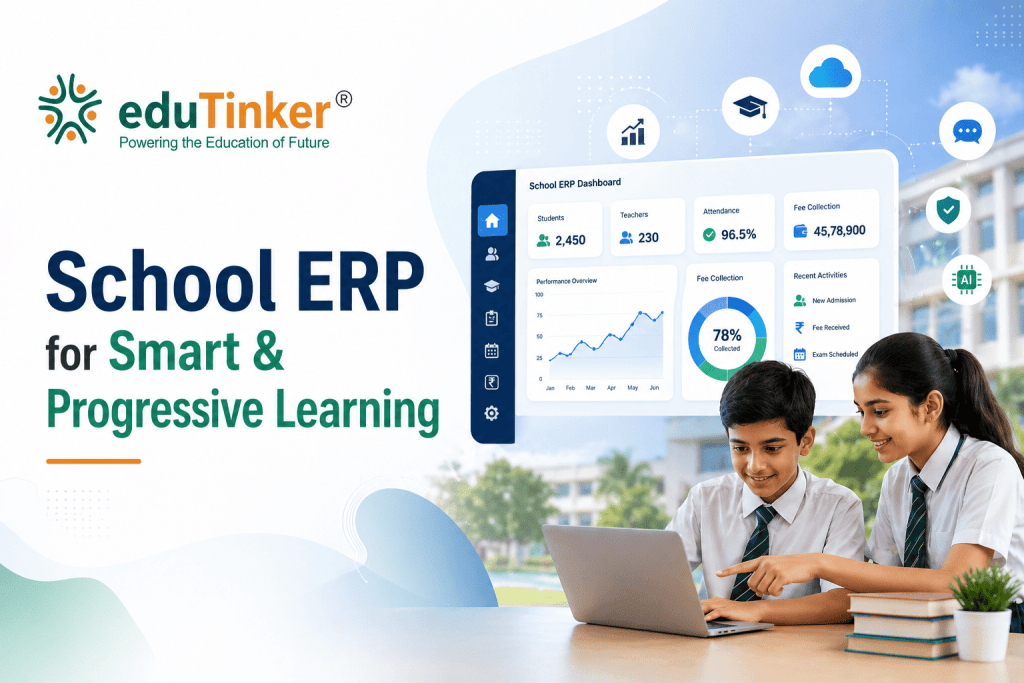
One of the best features of School Management Software is centralized data access. Administrators can easily retrieve student records, track performance metrics, and generate reports, all from one dashboard. This improves decision-making and helps schools maintain organized, secure records.
AI-Powered Automation in School Systems
Artificial Intelligence is transforming how schools operate. AI-powered systems are introducing automation and intelligent insights into traditional school management processes.
In the coming years, AI will play a major role in improving learning platforms for schools and administrative systems.
Some key applications of AI in school management include:
1. Smart Admission Management
AI can help automate and streamline school admissions in India by managing application workflows, verifying documents, and sorting applications based on eligibility criteria. This reduces administrative workload and speeds up the admission process.
2. Predictive Analytics for Student Performance
AI-driven analytics can track student progress and identify learning gaps early. Schools can use these insights to personalize learning experiences and provide timely support to students.
3. Intelligent Attendance and Monitoring
AI-powered systems can automate attendance tracking through biometric or facial recognition technologies. This ensures accuracy while saving time for teachers and administrators.
4. Automated Communication
AI chatbots and automated messaging systems can instantly respond to common parent queries, send notifications, and provide updates regarding exams, fees, or events.
These advancements are transforming traditional systems into intelligent school ecosystems.
Rise of Smart Schools in India
The concept of Smart Schools is rapidly gaining momentum in India. Smart schools leverage digital infrastructure, cloud-based platforms, and integrated learning management systems to create interactive and technology-driven learning environments.
Smart schools focus on three main areas:
- Digital Administration
- Technology-enabled Learning
- Real-time Communication
With the help of the best school software, schools can connect teachers, parents, and students on a single platform.
For example:
- Teachers can upload assignments and learning materials online.
- Parents can monitor attendance, grades, and announcements through mobile apps.
- Students can access digital learning resources anytime.
This connectivity improves transparency and enhances the overall educational experience.
Integration of LMS and School ERP Systems
Another important trend shaping the future of school management systems in India is the integration of Learning Management Systems (LMS) with ERP platforms.
While ERP systems focus on administration, LMS platforms support academic delivery and digital learning.
When these two systems are integrated, schools can:
- Manage academic content and administrative data in one platform
- Track student learning progress alongside attendance and performance
- Deliver hybrid or online education effectively
This combination creates a comprehensive school management system that supports both operational and academic needs.
Cloud Technology and Accessibility
Cloud computing is another major factor transforming the best school software in India.
Cloud-based school management systems provide several advantages:
- Access from anywhere
- Data security and backup
- Lower infrastructure costs
- Real-time updates and reporting
School administrators can monitor operations remotely, while teachers and parents can access the platform through mobile devices.
Cloud technology also improves accessibility, making school systems more inclusive and flexible.
Data Security and Transparency
With the increasing use of digital platforms, data security has become a priority for schools. Modern School Management Software is designed with advanced security features to protect sensitive student and institutional data.
Key security measures include:
- Encrypted databases
- Role-based access control
- Secure cloud hosting
- Automated backups
These features ensure that schools maintain confidentiality while enabling seamless data access for authorized users.
The Future Outlook for School Management Systems
The future of school management systems in India will revolve around automation, intelligence, and connectivity.
Schools will increasingly adopt systems that combine:
- AI-driven insights
- Integrated ERP platforms
- Cloud-based accessibility
- Smart learning technologies
These innovations will not only simplify administrative tasks but also enhance the overall learning environment.
Educational institutions that adopt modern ERP platforms in India for schools will be better equipped to manage growth, improve operational efficiency, and deliver quality education.
Conclusion
The education sector in India is moving toward a smarter and more connected future. With the adoption of AI, ERP systems, and digital learning platforms, schools are transforming how they manage operations and deliver education.
A modern School Management Software enables institutions to streamline administrative processes, improve communication, and support innovative teaching methods.
As technology continues to evolve, the future of school management systems in India will focus on intelligent automation, integrated learning platforms for schools, and cloud-powered accessibility.
Schools that embrace these advancements will not only improve efficiency but also create dynamic, technology-driven environments that benefit students, teachers, and administrators alike.
FAQs
1. What is a School Management System?
A School Management System is a digital platform that helps schools manage administrative tasks such as admissions, attendance, student records, fee management, and communication between teachers and parents.
2. How does AI improve school management systems?
AI helps automate tasks like admission processing, attendance tracking, and performance analysis. It also provides predictive insights that help schools improve student learning outcomes.
3. What is the difference between School ERP and LMS?
A School ERP focuses on administrative functions such as admissions, fees, and attendance, while a Learning Management System (LMS) supports teaching, online classes, and academic content delivery.
4. Why are schools adopting cloud-based school software?
Cloud-based school management systems allow schools to access data from anywhere, improve security, reduce infrastructure costs, and enable real-time communication between stakeholders.
5. What are the best features of School Management Software?
Some of the best features include admission management, attendance tracking, fee management, performance analytics, parent communication portals, and integration with digital learning platforms.