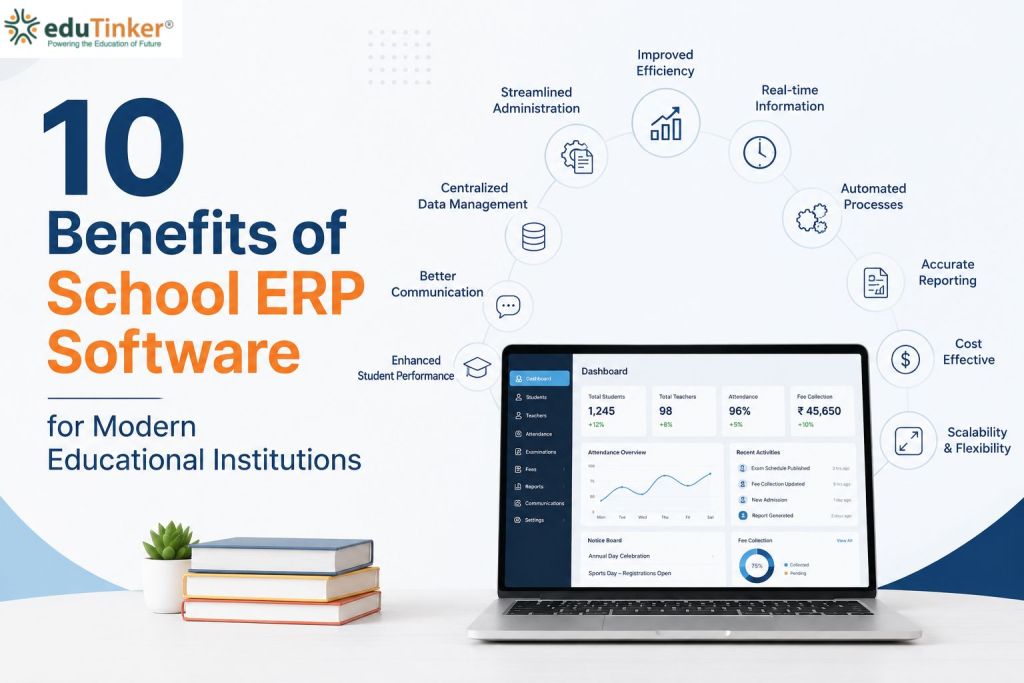


In today’s fast-evolving education landscape, colleges across India are rapidly shifting toward digital solutions to streamline operations and improve efficiency. One of the most impactful transformations has been the adoption of online admission management systems. From simplifying the application process to enhancing data accuracy, these systems are revolutionizing how educational institutions manage student admissions.
Let’s explore how admission management software is reshaping the future of college admissions in India.
What is an Online Admission Management System?
An online admission management system is a digital platform designed to automate and manage the entire admission process of colleges and universities. It enables students to apply online, upload documents, track application status, and receive updates—all from a centralized interface.
For educational institutions, this system acts as a cloud database that securely stores applicant data, manages workflows, and reduces manual intervention. It replaces traditional paperwork with localized databases and automated tools, making the admission process faster, more transparent, and error-free.
With increasing competition and growing student expectations, colleges are now relying heavily on admission software to deliver a seamless and efficient experience.
Read More: Smart ERP Platform for Colleges in India
Top 5 Benefits of Admission Management System
1. Streamlined Application Process
One of the biggest advantages of online admission systems is the simplification of the application process. Students can easily fill out forms, upload required documents, and submit applications without visiting the campus.
This not only saves time but also reduces the chances of errors in document submission and form filling. Colleges can process thousands of applications efficiently without bottlenecks.
2. Centralized Data Management
Admission software provides a centralized cloud database where all applicant information is stored securely. This eliminates the need for physical files and scattered records.
With localized databases, institutions can access data anytime, track student progress, and generate reports instantly. This improves decision-making and enhances operational efficiency.
3. Improved Accuracy and Reduced Errors
Manual admission processes are prone to errors such as misplaced documents, incorrect data entry, or duplication. Online systems automate data collection and validation, ensuring accuracy at every step.
Automated workflows reduce human intervention, making the entire system more reliable and consistent.
4. Enhanced Transparency and Communication
Online admission systems keep students informed throughout the process. From application submission to final selection, candidates receive real-time updates.
This transparency builds trust and improves the institution’s reputation. Colleges can also communicate important announcements, deadlines, and updates efficiently through the platform.
5. Cost and Time Efficiency
Implementing admission software significantly reduces administrative costs. There is less dependency on paper, printing, and manual labor.
Colleges can handle large volumes of applications in a shorter time, making the process faster and more cost-effective. Staff can focus on strategic tasks instead of repetitive administrative work.
The Need of Admission Management System
The growing demand for higher education in India has made traditional admission processes inefficient and outdated. Educational institutions often struggle with handling large numbers of applications, managing data, and ensuring timely communication.
Here’s why adopting an admission management system has become essential:
1. Rising Student Applications
With increasing competition, colleges receive thousands of applications every year. Managing this volume manually is time-consuming and prone to errors. Online admission systems help institutions handle large-scale data effortlessly.
2. Digital Transformation in Education
The education sector is undergoing rapid digital transformation. Students today expect a smooth, tech-enabled experience. An online admission system aligns with these expectations and enhances the institution’s digital presence.
3. Need for Data Security
Handling sensitive student data requires robust security measures. A cloud database ensures secure storage, controlled access, and data backup, reducing the risk of data loss or breaches.
4. Efficient Workflow Management
Admission software automates repetitive tasks such as application verification, document checks, and merit list generation. This improves workflow efficiency and reduces delays in the admission cycle.
5. Better Decision-Making with Analytics
Modern admission systems provide detailed insights and analytics. Colleges can track application trends, student demographics, and conversion rates.
These insights help institutions make informed decisions and improve their admission strategies.
Must Read: How Custom Admissions Boosts College Conversions
Conclusion
The adoption of an online admission management system is no longer a luxury but a necessity for colleges in India. It not only simplifies the application process but also enhances efficiency, accuracy, and transparency across all stages of admissions.
From managing document submission to maintaining secure cloud databases, admission software empowers educational institutions to operate smarter and faster. As the education sector continues to evolve, embracing digital solutions will be key to staying competitive and delivering a superior student experience.
Colleges that invest in modern online admission systems today are better positioned to attract, engage, and enroll students in a highly competitive academic environment.