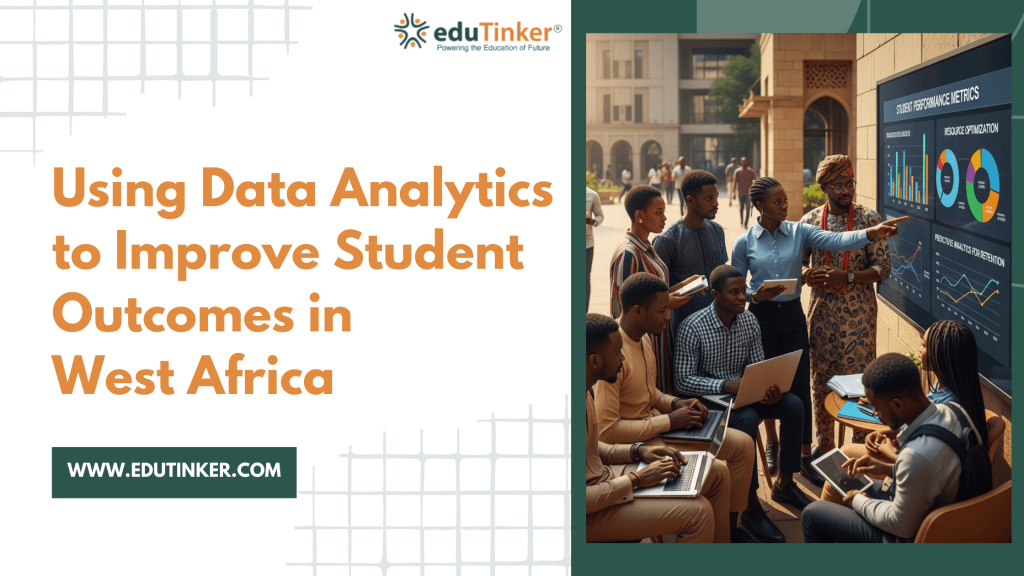

Higher education in West Africa is undergoing a powerful shift. As universities and colleges across countries like Nigeria, Ghana, Senegal, Ivory Coast, and Sierra Leone work to improve quality, access, and employability, data analytics in education has emerged as a critical driver of student success. Institutions are increasingly realizing that data-driven decision-making is no longer optional-it is essential for improving student outcomes across Africa.
For education technology platforms like Edutinker, data analytics offers a practical way to help West African institutions move toward outcome-based, student-centric education systems.
The Need for Data Analytics in West African Education
West Africa has one of the fastest-growing youth populations in Africa, creating immense pressure on higher education systems. Universities face challenges such as high dropout rates, uneven academic performance, limited faculty resources, and lack of real-time student insights. Traditional methods often rely on manual tracking and delayed reporting, which makes timely intervention difficult.
Data analytics in higher education enables institutions to move from reactive to proactive management-identifying learning gaps early, supporting at-risk students, and continuously improving academic delivery.
What Is Educational Data Analytics?
Educational data analytics involves collecting, analyzing, and interpreting data related to student behavior, academic performance, attendance, assessments, and engagement. When applied effectively, it helps institutions understand how students learn, where they struggle, and what actions improve outcomes.
Across West Africa, analytics is increasingly being integrated into:
- Learning Management Systems (LMS)
- Student Information Systems (SIS)
- Outcome-Based Education (OBE) frameworks
- Institutional performance dashboards
Key Ways Data Analytics Improves Student Outcomes
1. Early Identification of At-Risk Students
One of the most impactful uses of analytics is identifying students who may be at risk of dropping out or underperforming. By tracking attendance, assessment scores, participation, and submission patterns, institutions can intervene early with academic support, mentoring, or counseling.
This approach has proven especially valuable in African universities where large class sizes make individual monitoring challenging.
2. Personalized Learning Experiences
Data analytics allows institutions to move away from one-size-fits-all education. By analyzing student performance trends, universities can offer personalized learning paths, targeted remedial content, and adaptive assessments-helping students progress at their own pace.
Personalized learning is increasingly seen as a key solution for improving student engagement in West African higher education.
3. Outcome-Based Education and Curriculum Alignment
Many African institutions are adopting Outcome-Based Education (OBE) to align learning with industry and employability needs. Analytics plays a central role by mapping course outcomes, program outcomes, and student performance against predefined benchmarks.
This ensures that graduates from West African universities are not only academically qualified but also job-ready.
4. Improving Teaching Effectiveness
Data does not only benefit students-it empowers faculty. Analytics dashboards provide insights into teaching effectiveness, assessment quality, and course completion rates. Educators can refine teaching strategies, adjust content delivery, and improve assessment methods based on real data.
This continuous feedback loop enhances overall academic quality across institutions.
5. Enhancing Student Engagement
Engagement is a key predictor of success. Analytics helps institutions track student interaction with digital content, online discussions, quizzes, and virtual classrooms. Low engagement signals can trigger timely interventions, improving retention and academic performance.
Role of Digital Platforms in West Africa
The growth of digital infrastructure across West Africa has accelerated the adoption of analytics-driven education systems. Cloud-based platforms, mobile-friendly dashboards, and scalable EdTech solutions are making analytics accessible even in resource-constrained environments.
EdTech platforms like Edutinker enable institutions to:
- Centralize academic and student data
- Generate real-time performance insights
- Support accreditation and compliance needs
- Scale analytics across departments and campuses
Benefits of Data-Driven Education in Africa
Improved Retention and Completion Rates
By identifying challenges early and providing targeted support, institutions can significantly reduce dropout rates—a major concern across African higher education.
Better Academic Decision-Making
Leadership teams can make informed decisions on curriculum changes, faculty deployment, and resource allocation using accurate data insights.
Transparency and Accountability
Analytics improves transparency for students, faculty, and regulators by providing clear performance metrics and outcome tracking.
Stronger Employability Outcomes
Data-driven curriculum alignment ensures graduates possess relevant skills, improving employability across regional and global job markets.
Challenges in Implementing Data Analytics
Despite its benefits, implementing analytics in West African institutions comes with challenges:
- Limited digital infrastructure in some regions
- Data literacy gaps among faculty and administrators
- Resistance to change from traditional systems
- Concerns around data privacy and governance
Addressing these challenges requires phased implementation, faculty training, strong leadership commitment, and reliable technology partners.
Best Practices for Successful Adoption
To maximize impact, West African institutions should:
- Start with clear academic and outcome goals
- Integrate analytics into existing LMS and SIS platforms
- Train faculty and administrators on data usage
- Use insights for continuous improvement, not just reporting
- Partner with experienced EdTech providers
The Future of Data Analytics in West African Higher Education
As Africa’s education ecosystem evolves, data analytics will become the backbone of quality assurance and student success. Institutions that invest early will be better positioned to meet accreditation standards, attract international partnerships, and deliver globally competitive education.
West Africa, with its growing digital adoption and youthful population, has a unique opportunity to leapfrog traditional models and embrace analytics-led education systems.
Conclusion
Using data analytics to improve student outcomes in West Africa is transforming how higher education institutions teach, assess, and support learners. By leveraging real-time insights, outcome-based frameworks, and digital platforms, universities can enhance academic quality, boost retention, and prepare students for the modern workforce.
For institutions across Africa, partnering with analytics-driven platforms like Edutinker enables a structured, scalable, and future-ready approach to educational excellence—ensuring that every student has the opportunity to succeed.