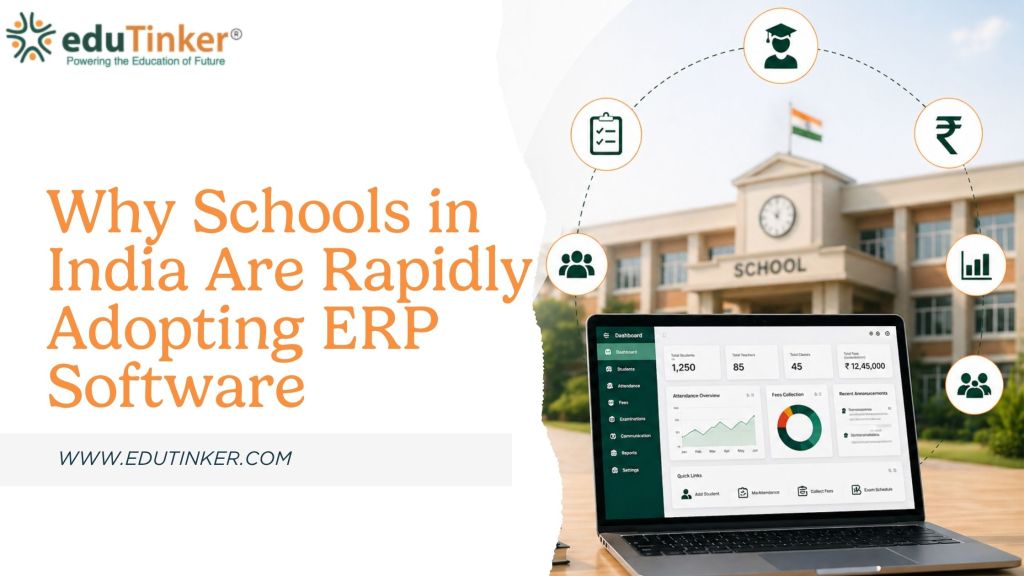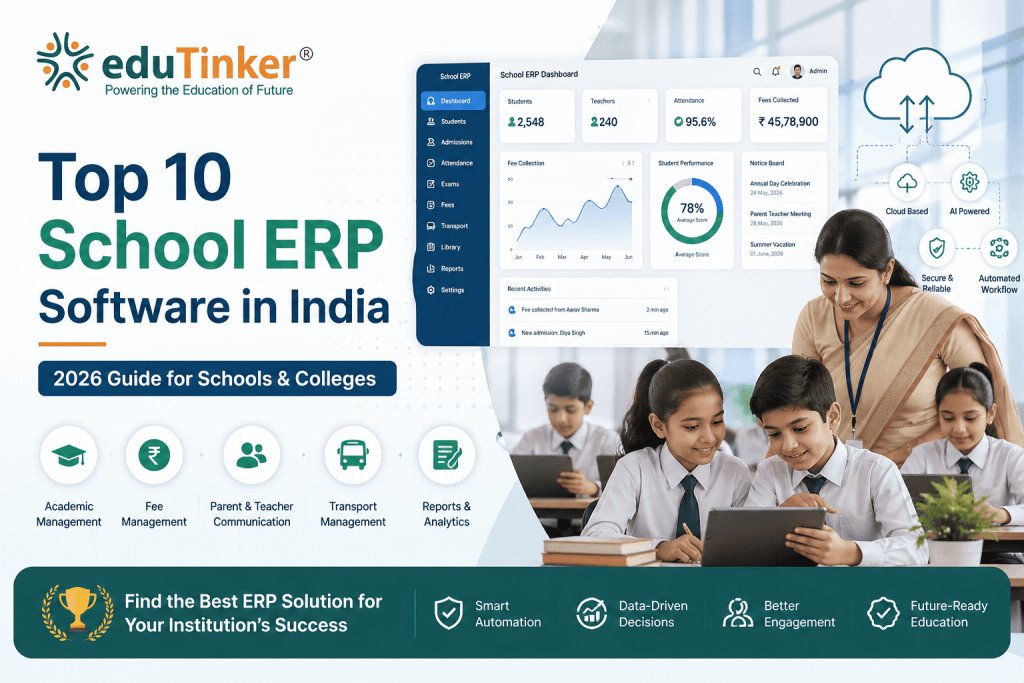

India’s education sector is rapidly becoming more digital, and schools are no longer relying only on traditional registers, spreadsheets, and disconnected software to manage daily operations. In 2026, a reliable School ERP app in India has become an important part of efficient school management.
From admissions and fee collection to attendance, examinations, communication, and academic planning, schools need a centralized system that can simplify operations while improving the experience for administrators, teachers, students, and parents.
What Is a School ERP App?
A School ERP (Enterprise Resource Planning) app is a centralized digital platform that helps educational institutions manage their academic and administrative activities from one place.
Instead of using different tools for fees, attendance, communication, examinations, and student records, a school ERP brings these functions together. This allows school management to access important information quickly and make better decisions using real-time data.
In 2026, the requirement is no longer just for basic school management software. Schools need an all-in-one education ERP system that can adapt to their changing requirements.
Why Is School ERP Important for Indian Schools in 2026?
1. Simplifies School Administration
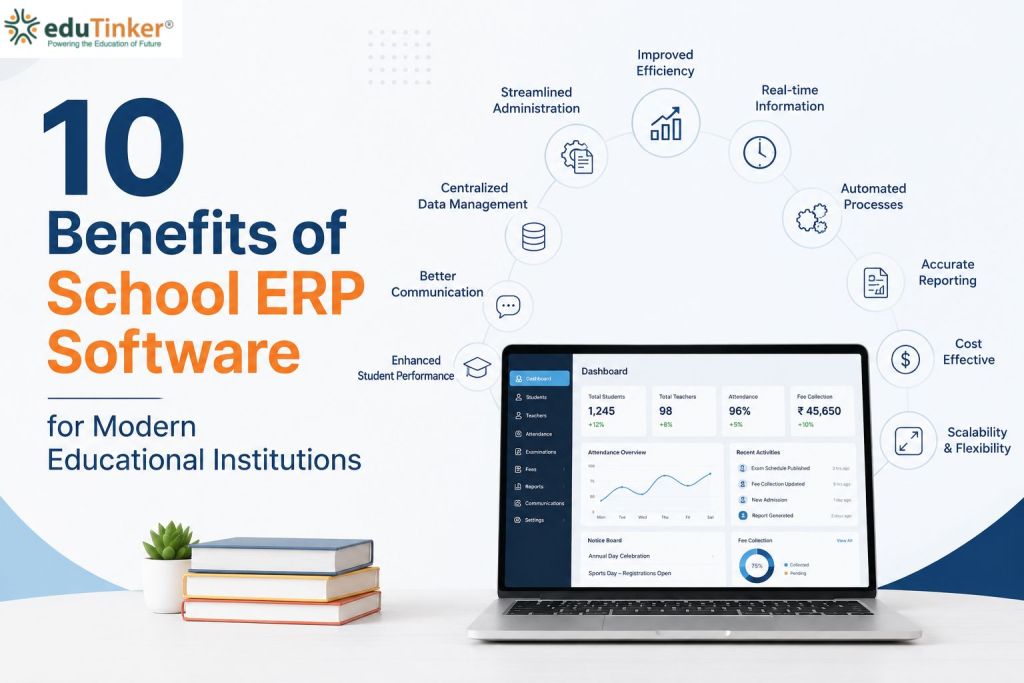
Managing thousands of student records manually can consume significant time and resources. A school ERP app can digitize processes such as admissions, student information, attendance, fee management, report cards, transport, and staff management.
This reduces repetitive administrative work and allows school staff to focus on more important responsibilities.
2. Makes Fee Management More Efficient
Fee collection is one of the most important administrative functions for schools. A modern school management ERP can help manage fee structures, payment records, reminders, receipts, and outstanding payments from a centralized platform.
This gives administrators better visibility into the financial status of the institution while making payment management easier for parents.
3. Improves Teacher and Student Management
Teachers require easy access to attendance, assignments, examinations, academic planning, and student information. With an ERP app, teachers can manage several academic activities digitally.
Features such as online assignments, tests, auto-grading, learning content, and attendance can reduce paperwork and create a more organized learning environment.
4. Strengthens Parent-School Communication
Parents increasingly expect faster and more convenient communication from schools. A school ERP mobile app can provide updates about attendance, fees, assignments, examinations, notices, and other important information.
Better communication helps parents stay involved in their child’s education without depending entirely on physical notices or phone calls.
5. Enables Data-Driven Decision Making
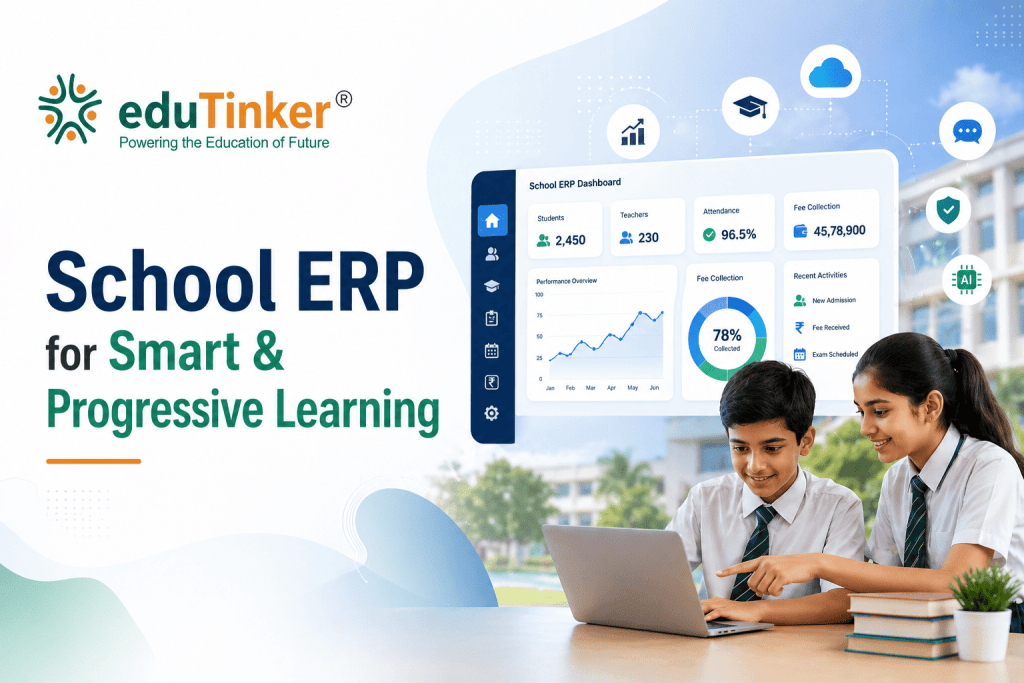
One of the biggest requirements for schools in 2026 is access to meaningful data. School management can use ERP dashboards and analytics to understand attendance patterns, academic performance, fee collection, and other operational metrics.
This enables principals, trustees, and administrators to make decisions based on data rather than assumptions.
What Should Schools Look for in an ERP App in 2026?
Before choosing an ERP for schools in India, institutions should consider scalability, ease of use, mobile accessibility, data security, reporting capabilities, integrations, and customer support.
An ideal ERP should cover essential functions such as:
- Student and staff management
- Admissions management
- Fee and finance management
- Attendance tracking
- Examination and report cards
- Transport management
- Assignments and assessments
- Learning management
- Parent communication
- Visitor management
- Analytics and reports
- Inventory management
- Accounting integrations
The platform should also be easy for teachers, administrators, parents, and students to use without requiring extensive technical knowledge.
The Future of School Management in India
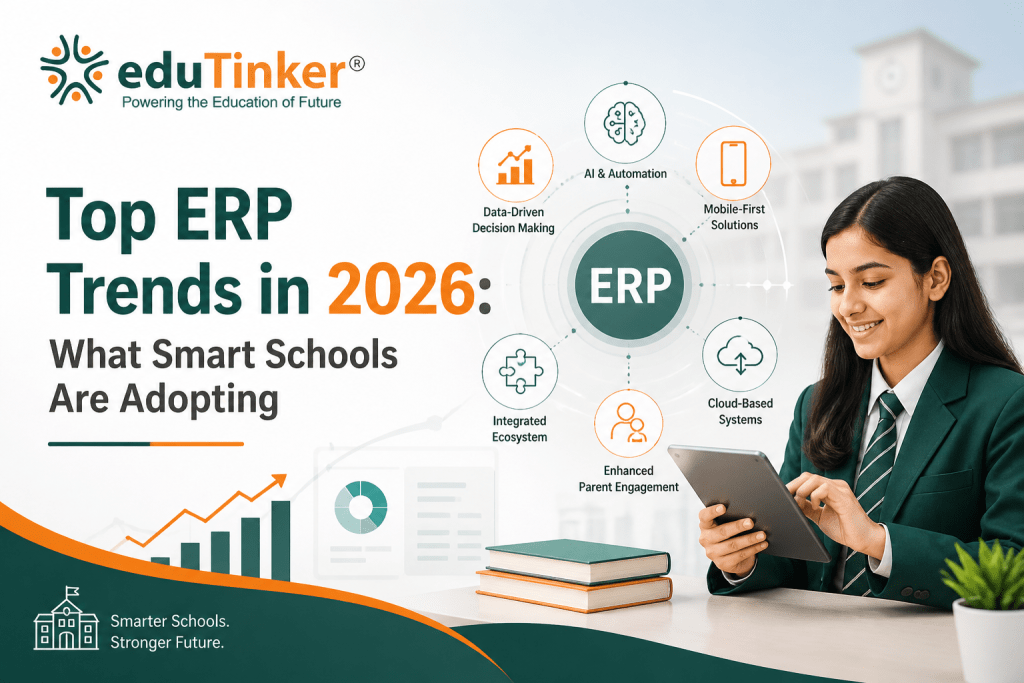
The demand for digital education management will continue to grow as Indian schools become more technology-driven. In 2026, adopting a School ERP app is not simply about replacing paperwork—it is about creating a connected ecosystem where academic, administrative, financial, and communication processes work together.
For schools looking to improve efficiency, reduce manual work, enhance communication, and gain better visibility into their operations, investing in the right School ERP software in India can be an important step toward smarter school management.