

Mumbai has always been one of India’s major education hubs, and schools across the city are increasingly embracing technology to make everyday management simpler. With busy administrative teams, growing student numbers, and rising expectations from parents, keeping everything organised can be challenging.
School admissions, fee collection, examinations, communication, attendance, and student records are just some of the responsibilities schools need to handle every day. Managing all of these activities manually can take a lot of time and often adds unnecessary work for teachers and administrative staff.
That is why School ERP Software in Mumbai is becoming increasingly popular in 2026.
Many schools still find themselves juggling registers, spreadsheets, multiple applications, and constant follow-ups. An integrated School ERP brings these everyday operations together in one place. It can reduce repetitive work, keep information organised, improve accuracy, and make it easier for teachers, administrators, and parents to access the information they need.
Why Mumbai Schools Need Smarter School Management
Running a school involves much more than managing classrooms and lesson plans. Behind the scenes, there are countless responsibilities to take care of every day — from student records and admissions to attendance, fee collection, examinations, staff details, reports, transportation, and parent communication.
The challenge becomes even greater when these activities are managed separately. Important information can end up scattered across spreadsheets, files, registers, and different software. Staff may have to enter the same details more than once, while administrators can spend hours checking records or preparing reports.
This is where school management software can make a real difference.
A School ERP brings important information and everyday processes into one central system. Instead of searching through different files or applications, authorised users can access the information they need from one place. It also gives school management a clearer picture of what is happening across different departments.
For schools in a busy city like Mumbai, having a connected system can save valuable time and make everyday administration much easier.
1. Growing Demand for Digital School Administration
Schools are becoming more digital because expectations have changed as well.
Parents want clear and timely information about their children’s activities, including attendance, fees, examination results, assignments, and upcoming events. Teachers also need simple tools that make administrative work easier and reduce the amount of time they spend on manual tasks.
At the same time, principals and school management need a clear overview of how different areas of the institution are performing.
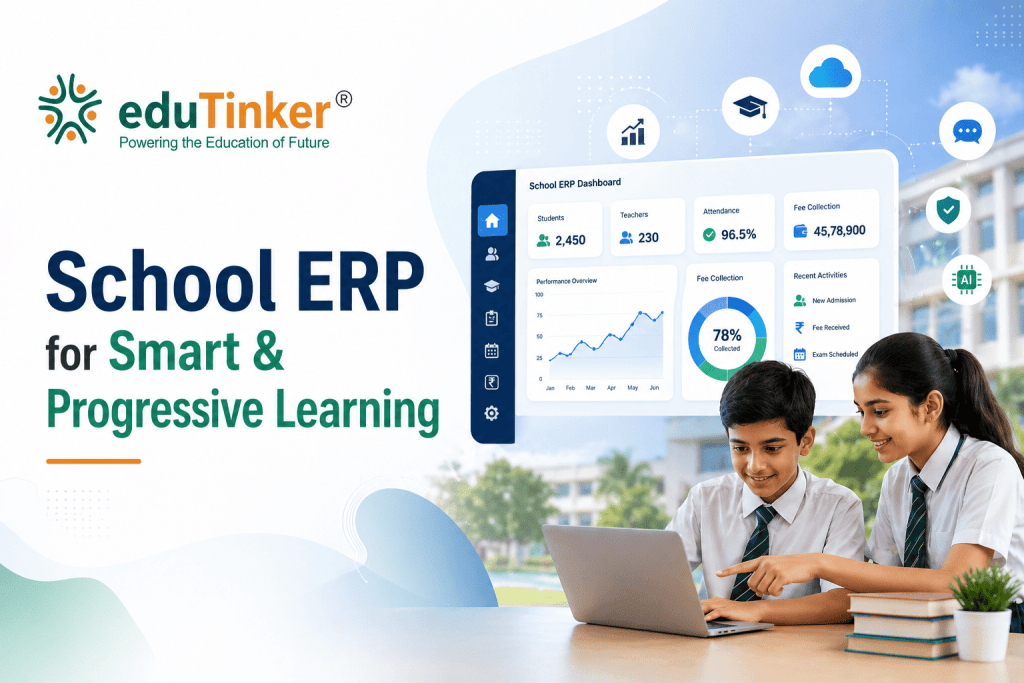
An eduTinker School ERP can bring these needs together on one platform. Instead of relying on separate tools for different departments, schools can manage key academic and administrative activities through a connected system.
For a Mumbai school, this can mean less time spent switching between different applications and more time available for work that requires personal attention.
2. Easier Fee Management and Online Payments
Fee collection is an essential part of school administration, but keeping track of everything manually can quickly become a daily challenge.
Schools have fee structures to maintain, payments to record, receipts to issue, outstanding amounts to monitor, and sometimes several follow-ups with parents. When the number of students is large, even small administrative tasks can add up.
A modern fee management system keeps these records organised and makes them easier to manage.
Schools can track payments, pending fees, receipts, and collection records without relying on multiple spreadsheets. With online fee collection, parents can also make payments digitally without having to visit the school every time a fee is due.
This makes the payment process more convenient for parents while giving the school administration better visibility into its fee collections.
3. Streamlined Admissions and Student Records
For many schools, admission season is one of the busiest times of the year. Applications need to be processed, documents have to be checked, student information needs to be recorded, and parents often require regular updates throughout the process.
An admission management system can reduce much of the paperwork involved.
Instead of maintaining stacks of forms or separate spreadsheets, schools can manage admission information digitally. Once a student joins the school, their details can also be connected with other areas such as attendance, fees, academics, and examinations.
This avoids repeatedly collecting or entering the same information and gives the school a more complete student record from the beginning.
4. Better Attendance Management
Taking attendance may only take a few minutes each day, but managing attendance for hundreds or thousands of students is a different challenge.
Paper registers require regular manual entries and can make it difficult to quickly identify attendance patterns. An attendance management system gives teachers a simpler way to record attendance while making the information readily available to administrators.
School management can check attendance records whenever required, while parents can receive timely updates about their child’s attendance.
For larger schools, having accurate attendance information in one place can make routine monitoring much easier and less time-consuming.
5. Turning School Data Into Useful Insights
Every school generates a large amount of data. Attendance records, fee payments, examination results, student information, and administrative records all contribute to a better understanding of how a school is performing.
However, simply collecting data is not enough. The real value comes from being able to understand it and use it effectively.
This is where school analytics becomes useful.
A School ERP can bring information from different areas together through reports and dashboards. School leaders can use these insights to identify trends, understand areas that need attention, and make more informed decisions.
For example, instead of manually comparing attendance or examination records across several files, administrators can access organised information through a central system.
This makes school planning more practical and reduces the need to rely on assumptions or scattered information.
6. More Effective Parent-Teacher Communication
Communication between schools and parents has become an important part of the modern school experience.
Parents want to stay updated about their child’s progress and school activities, while teachers and administrators need a dependable way to share important information. When messages are spread across different apps, groups, emails, or paper notices, keeping track of everything can become difficult.
A School ERP software with parent communication features provides a more organised way for schools to stay connected.
Announcements, attendance updates, examination information, fee reminders, academic updates, and other important notifications can be shared through a central platform.
Parents get easier access to relevant information, while schools can maintain more consistent communication without depending on several different channels.
7. Flexible Access With Cloud-Based School ERP
The growing preference for cloud technology is another reason behind the adoption of School ERP Software in Mumbai in 2026.
With a cloud-based School ERP, authorised users can access important school information through connected devices instead of being restricted to a particular computer or office.
This can be especially useful for principals, school owners, trustees, and administrators who may need to check information while managing responsibilities across different areas of the school.
Cloud-based systems can also support schools that are growing or operating across multiple campuses. Information can be managed more conveniently across departments and locations.
For schools planning for long-term growth, this flexibility can be a valuable advantage.
8. One Platform Instead of Multiple Tools
One of the biggest reasons schools consider an ERP is simple: they do not want to keep adding a new tool every time they have a new requirement.
Without an ERP, a school might use one system for fees, another for attendance, spreadsheets for staff information, a separate application for communication, and physical records for other administrative tasks.
Over time, this can create several problems. Information may get duplicated, staff may have to enter the same details repeatedly, and it may not always be clear where the latest information is stored.
An integrated school management software platform brings these functions together. Admissions, attendance, fee management, examinations, communication, reports, HR, and other operations can work as part of one connected system.
For a growing school, this is much easier to manage than constantly adding and maintaining separate tools.
9. Preparing Schools for the Future
Technology in education is no longer limited to smart classrooms, online lessons, or digital learning platforms. The administrative side of running a school is becoming increasingly digital as well.
Schools that build a strong digital foundation today can be better prepared for future changes. Automation, AI, analytics, mobile applications, and other technologies are becoming increasingly relevant to education. Having organised digital data and connected systems can help schools make better use of these developments.
Modern ERP platforms are therefore moving beyond basic record keeping. They can help schools automate routine tasks, understand their data, communicate more effectively with parents, and make better day-to-day decisions.
Why eduTinker Can Be a Smart Choice for Mumbai Schools
When choosing the best School ERP software, schools should look beyond a long list of features. What matters more is whether the platform is practical, easy to use, scalable, and capable of addressing real administrative challenges.
eduTinker offers a comprehensive School ERP platform that brings key school operations together in one digital environment. Schools can manage admissions, attendance, fee management, examinations, school analytics, communication, HR and payroll, along with other essential processes, without depending on multiple disconnected systems.
For Mumbai schools, having these functions connected can reduce repetitive administrative work and make important information easier to access. More importantly, it gives teachers and administrators more time to focus on students and the overall growth of the institution.
Conclusion
The growing adoption of School ERP Software in Mumbai is part of a wider shift taking place across the education sector. Schools are gradually moving away from paperwork and disconnected systems because managing a modern institution requires greater efficiency, transparency, and convenience.
From fee management and online fee collection to admissions, attendance, examinations, parent communication, and school analytics, an integrated ERP can simplify many of the everyday processes that keep a school running.
For schools in Mumbai, the conversation in 2026 is moving beyond whether digital management is necessary. The more important question is which School ERP can genuinely make daily operations simpler and more efficient.
For institutions looking to become more organised, data-driven, and future-ready, choosing a reliable School ERP in Mumbai can be a practical step towards smarter school management.