
Technology has become an important part of modern education. Schools are no longer limited to classroom teaching, printed notes, and traditional assessments. Students can access learning resources online, teachers can share assignments digitally, and parents can stay more informed about academic activities.
However, using several different apps and platforms for these activities can create its own challenges. Teachers may share study material through one platform, collect assignments through another, and communicate with students through messaging applications.
A Learning Management System (LMS) brings these learning activities together in one organised digital environment.
For Indian schools, choosing the right LMS is about more than simply finding a platform to upload study material. The system should be easy for teachers and students to use, flexible enough for different learning requirements, and capable of supporting the school as its digital needs grow.
What Is a Learning Management System for Schools?
A Learning Management System for schools is software that helps educational institutions manage digital learning and academic activities from one platform.
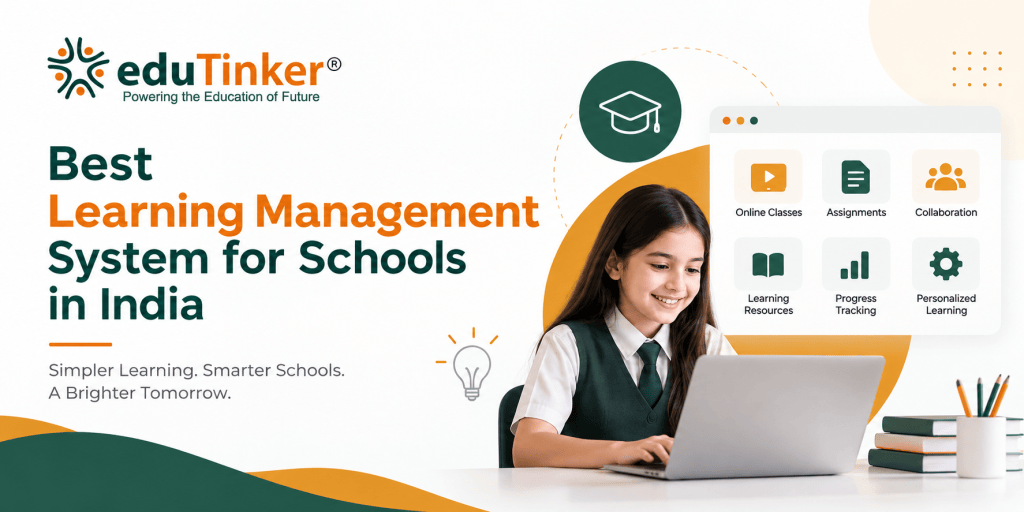
Teachers can use an LMS to share study material, create assignments, conduct assessments, communicate with students, and monitor learning activities. Students can access their resources, complete assignments, and stay updated with their academic work.
A school LMS can also give administrators better visibility into how digital learning is being used across classes and subjects.
When an LMS is connected with broader school management software, it can become part of a larger digital ecosystem that connects learning with student information, academics, attendance, communication, and other school operations.
Why Do Schools Need an LMS?
The way students learn is changing. Digital resources can give students access to learning material beyond the classroom and allow teachers to continue academic activities outside regular teaching hours.
An LMS can also reduce the dependence on scattered communication channels. Instead of searching through messages or emails for an assignment or study material, students can find relevant resources in one place.
For teachers, a central learning platform can make it easier to organise resources, share assignments, collect submissions, and monitor academic activities.
The goal is not to replace classroom teaching. Rather, a Learning Management System can extend the classroom into a structured digital environment.
Key Features of a Learning Management System for Schools
1. Easy-to-Use Interface
An LMS should make learning easier rather than add another complicated system for teachers and students.
Simple navigation, clearly organised courses, easy access to resources, and straightforward assignment submission can make a significant difference to everyday usage.
This is particularly important for schools where teachers have different levels of technical experience. If the platform is intuitive, teachers can spend more time using it for teaching instead of figuring out how the software works.
2. Digital Learning Resources
A good school LMS should allow teachers to organise and share different types of learning content.
This may include:
- Study notes
- Presentations
- Documents
- Videos
- Reference material
- Subject-related resources
Keeping these resources in one place makes it easier for students to find the material they need.
It also gives teachers a more organised way to distribute learning content to specific classes or groups.
3. Assignment Management
Assignments are a regular part of school education, but managing them manually can become time-consuming.
With an LMS, teachers can create and share assignments digitally while students can submit their work through the same platform.
This gives teachers a central place to track submissions and reduces the need to maintain separate lists of completed and pending assignments.
For students, it also becomes easier to see what work has been assigned and what needs to be completed.
4. Online Assessments and Quizzes
Regular assessments help teachers understand how well students are following a particular topic.
A modern LMS software for schools can support online quizzes, tests, and other assessments. Teachers can use digital assessments to check student understanding and review results.
When assessment information is available through the same learning platform, teachers can more easily connect learning resources with student performance.
5. Student Progress Tracking
One of the useful aspects of digital learning is the ability to monitor learning activity.
A good LMS should provide information that helps teachers understand assignment completion, assessment performance, and other relevant academic activities.
This does not mean relying only on numbers. Teachers can use this information alongside their classroom observations to identify students who may need additional guidance or practice.
6. Teacher-Student Communication
Learning requires regular communication.
An LMS can give teachers a dedicated space to share instructions, academic announcements, assignment information, and other learning-related updates.
Keeping academic communication connected to the learning platform can make information easier for students to find and reduce dependence on scattered messaging channels.
7. Parent Access
Parents are an important part of a student’s learning journey.
An LMS that provides relevant parent access can give families better visibility into learning activities, assignments, academic updates, and other information shared by the school.
This can be especially useful when the LMS is connected with broader school management software, allowing parents to access relevant school and academic information through a connected platform.
8. Mobile-Friendly Learning
Students and parents frequently use smartphones to access digital services. Therefore, mobile accessibility should be considered when choosing an online learning platform for schools.
A mobile-friendly LMS can allow users to access learning resources, assignments, notifications, and other academic information from their devices.
This makes digital learning more accessible beyond the classroom and can support students when they need to revise or complete academic work at home.
Flexible Learning Management System for Different School Needs
Schools do not all teach in exactly the same way. Different classes, subjects, teachers, and student groups may have different requirements.
This makes flexibility an important feature of a Learning Management System in India.
A flexible LMS should allow teachers to organise content according to their subjects and classes. They may need to share different types of resources, create assignments, conduct assessments, or provide additional learning material to students who need more practice.
The platform should also be able to grow with the school. Adding new students, teachers, classes, or subjects should not make the system difficult to manage.
For Indian schools, flexibility can be particularly important because institutions may follow different educational boards and academic structures. The LMS should support these differences rather than forcing every school into the same workflow.
How Is AI Used in the Learning Environment?
Artificial intelligence is becoming an emerging part of digital education. When used responsibly, AI can support teachers and students in several areas of the learning process.
AI-powered tools can assist teachers with creating learning resources, preparing practice questions, organising content, and developing ideas for classroom activities. AI can also support more personalised learning by helping identify areas where students may need additional practice.
However, AI should support teachers rather than replace them.
Teachers still play the central role in understanding students, explaining concepts, providing feedback, managing classrooms, and deciding how learning should take place.
As schools evaluate LMS software, they can consider whether the platform is prepared to support emerging technologies such as AI while maintaining appropriate privacy, security, and teacher control.
How to Choose the Right LMS for Your School
Choosing the right Learning Management System for schools should begin with understanding what the school actually needs.
Instead of choosing a platform simply because it has a long list of features, school administrators should consider how the LMS will fit into their existing teaching process.
Start With Your Requirements
Identify what teachers and students need on a daily basis.
Does the school primarily need digital study material and assignment management? Or does it also require assessments, progress tracking, communication, analytics, and parent access?
Defining these requirements first can make it easier to compare different LMS platforms.
Consider Ease of Use
An LMS may have advanced functionality, but it will not be useful if teachers and students find it difficult to operate.
Look for simple navigation, clear dashboards, easy content sharing, and straightforward assignment submission.
Check Mobile Accessibility
Since smartphones are widely used for accessing digital services, check whether the LMS provides a good mobile experience.
Teachers and students should be able to access relevant learning information without being dependent on a desktop computer.
Look at Security
Schools handle student information and academic records, so security should be an important part of the selection process.
Check features such as secure login, user permissions, data protection, backups, and access controls.
Think About Future Growth
The LMS should be able to support the school as it grows.
Consider whether it can accommodate more students, teachers, classes, subjects, and learning resources without making administration unnecessarily complicated.
Check Integration With School ERP
An LMS can become more useful when it works alongside other school systems.
If the platform can integrate with school ERP or school management software, schools can create a more connected digital environment where student information, academics, attendance, communication, and learning activities work together.
eduTinker Learning Management System
eduTinker’s Learning Management System provides schools with a digital environment to support learning activities and connect teachers and students through one platform.
By bringing learning activities into a structured digital environment, schools can make it easier to share resources, manage academic activities, and keep students connected with their learning.
The LMS can also complement wider school management processes. When learning functions work alongside areas such as student information, academics, attendance, communication, and school management, institutions can reduce their dependence on multiple disconnected tools.
For schools looking for a Learning Management System in India, eduTinker can be evaluated based on the school’s specific learning requirements, user experience, flexibility, mobile accessibility, security, and integration needs.
The right LMS is ultimately not the platform with the longest feature list. It is the one that teachers can use comfortably, students can access easily, and school management can rely on as part of its everyday digital learning environment.