
India’s education sector is rapidly evolving, and schools are increasingly adopting technology to improve administration, communication, and learning outcomes. One of the most important technologies transforming school management today is School ERP (Enterprise Resource Planning) software.
A School ERP brings different administrative and academic functions together on a single digital platform, helping schools manage their everyday operations more efficiently.
What Is a School ERP?
A School ERP is an integrated school management system designed to automate and simplify various processes within an educational institution. Instead of managing attendance, student records, fees, examinations, communication, and other activities through separate systems or paperwork, schools can manage everything from one centralized platform.
For Indian schools managing hundreds or thousands of students, this can significantly reduce administrative workload and improve accuracy.
Why Is ERP Important for Indian Schools?
1. Simplifies School Administration
Managing student information, staff records, attendance, fees, examinations, and schedules manually can be time-consuming. A School ERP in India automates many repetitive administrative tasks, allowing teachers and administrators to focus more on students and education.
2. Improves Communication
Effective communication between schools, teachers, students, and parents is essential. ERP platforms enable schools to share announcements, attendance updates, academic information, notices, and other important updates quickly through digital channels.
3. Provides Real-Time Data
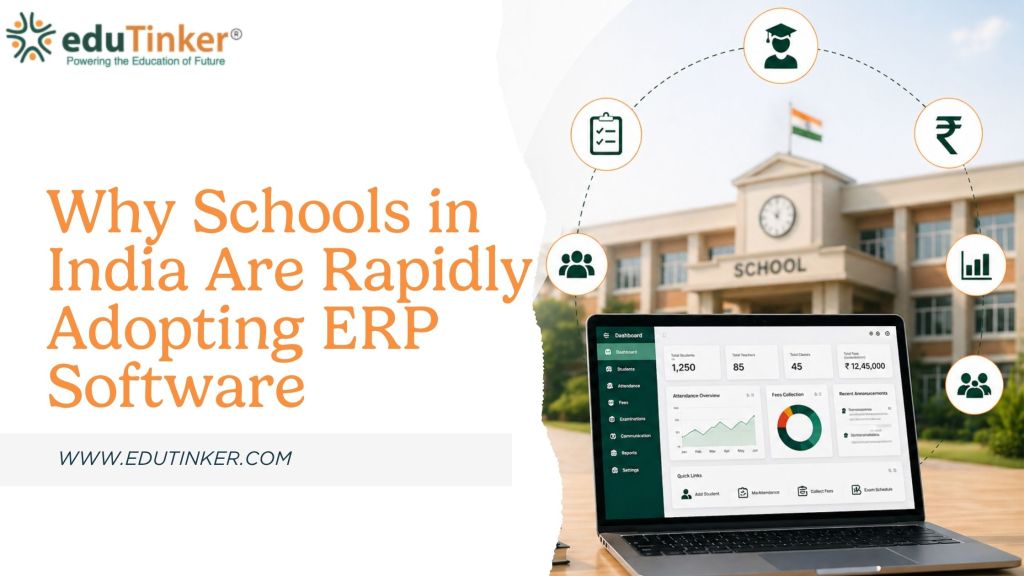
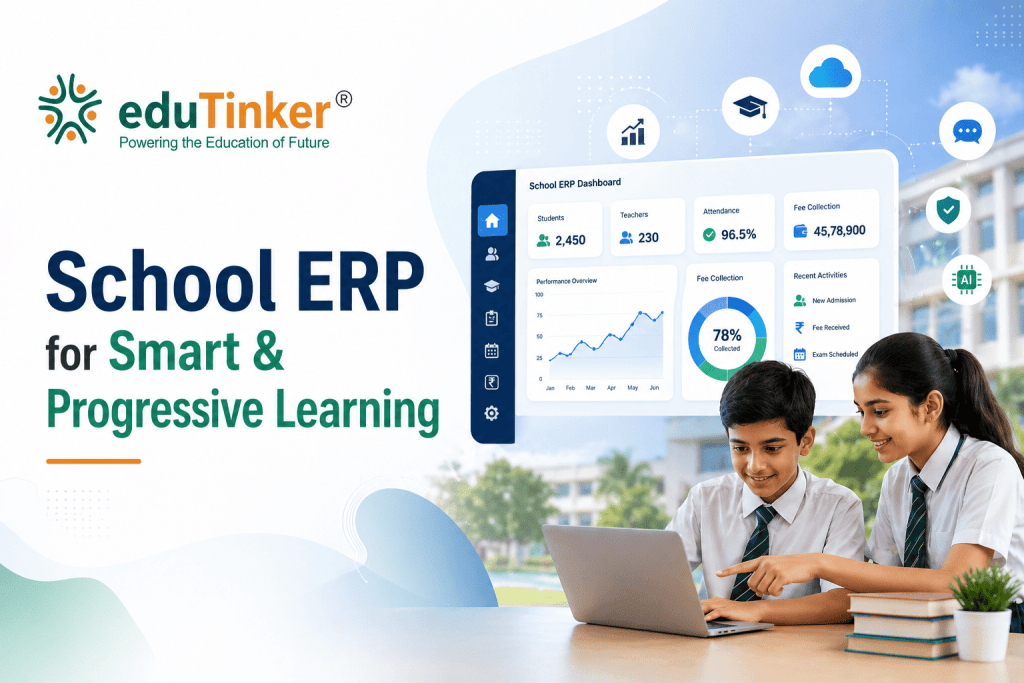
School management requires accurate and timely information. With an ERP system, administrators can access real-time data through centralized dashboards and reports. This helps school leaders make better, data-driven decisions.
4. Makes Attendance and Academic Tracking Easier
Digital attendance systems make it easier to record and monitor student attendance. Schools can also track examination results, academic performance, assignments, and other student information in one place.
5. Supports Better Financial Management
Managing school fees and expenses manually can lead to errors and delays. A school ERP can simplify fee collection, payment tracking, budgeting, and financial reporting, helping schools maintain better control over their finances.
6. Creates a More Connected School
Modern schools need more than basic administration tools. A comprehensive ERP connects school management, teachers, students, and parents through one digital ecosystem, creating a smoother and more transparent educational experience.
The Future of School Management in India
As Indian schools continue to embrace digital transformation, School ERP software is becoming an essential part of modern education management. It can reduce paperwork, save time, improve communication, and provide valuable insights for better decision-making.
Platforms like EduTinker help educational institutions bring multiple school management functions together in one convenient system.
For schools looking to improve efficiency while delivering a better experience for teachers, parents, and students, adopting the right School ERP in India can be an important step toward building a smarter, more connected, and future-ready institution.