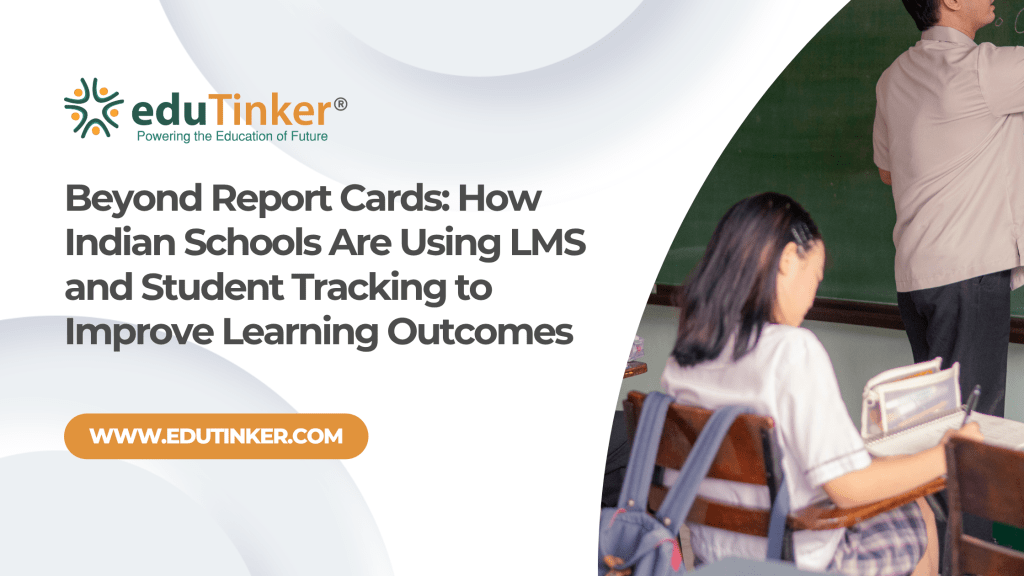

For decades, the report card has been the primary tool Indian schools use to communicate student progress. Issued twice or three times a year, it summarises performance in a handful of numbers. Parents look at the marks. Students feel pride or disappointment. And then everyone moves on.
The problem is that a report card tells you where a student ended up not how they got there, where they struggled, or what kind of support they needed along the way. By the time a student receives poor marks in their term examination, weeks of learning gaps have already accumulated.
Across India, forward-thinking CBSE and ICSE schools are recognising this limitation. They are turning to learning management systems and student progress tracking tools to build a more complete, real-time picture of every learner one that enables teachers to intervene earlier and parents to stay genuinely informed.
The Gap Between Teaching and Learning in Indian Classrooms
India has some of the most dedicated teachers in the world. The challenge is not effort it is data. In a classroom of 40 students, a teacher cannot simultaneously track where each student stands on every concept. Some students stay quiet even when they are confused. Others mask their struggles until examination season reveals the damage.
This visibility gap is especially costly in competitive academic environments. For students preparing for board examinations under CBSE or ICSE curricula, a concept gap in Class 8 can silently compound into a serious disadvantage by Class 10. By the time the problem is visible, recovery is difficult.
A learning management system with built-in student tracking changes this dynamic. Instead of waiting for exam results to reveal problems, teachers and principals can see learning gaps as they develop and act early.
How EduTinker’s LMS and Student Tracking Work Together
EduTinker combines digital content delivery, assignment tracking, and student analytics in a single platform designed for Indian schools. Here is how it supports better learning outcomes.
Structured Digital Content Aligned to CBSE and ICSE Curricula
EduTinker’s digital content library is mapped directly to the CBSE and ICSE syllabi. Teachers can assign concept-specific videos, notes, and practice exercises to students either as in-class resources or homework. Because the content is already aligned to the curriculum, teachers spend less time preparing material and more time on actual teaching.
For students who need to revisit a concept after class, EduTinker’s content is accessible on mobile devices. This is particularly valuable in India, where students increasingly use smartphones for study but often lack access to structured, curriculum-aligned digital resources.
Assignment Submission and Completion Tracking
When assignments are managed through EduTinker, teachers can see instantly who has submitted, who has not, and how students performed. Submission rates become visible at a glance. Repeated non-submission flags a student for early attention before it becomes a habitual pattern.
For parents, assignment tracking brings an important shift. Rather than relying on a student’s word about what homework was given, parents can check EduTinker directly. This transparency builds accountability without confrontation and keeps parents meaningfully involved in their child’s daily academic life.
Student Progress Reports That Go Beyond Marks
EduTinker’s student progress module gives teachers and principals a timeline view of each student’s academic journey. Subject-wise performance trends, attendance correlation, and assignment completion patterns are all visible together. This holistic view helps teachers identify not just which students are struggling, but why and what kind of support is most likely to help.
For principals presenting academic performance data to trustees or school management boards, EduTinker’s reports provide the kind of structured, data-backed analysis that generic spreadsheets simply cannot deliver.
Why This Matters for Indian School Owners and Trustees
Academic outcomes are increasingly central to the reputation and competitiveness of private schools in India. Parents in urban and semi-urban markets are more discerning than ever. They choose schools not just based on infrastructure or brand name, but on evidence of genuine learning support.
When a school can demonstrate through structured data and transparent progress tracking that it monitors every student individually and intervenes early when needed, that becomes a powerful admissions differentiator. It also reduces the school’s vulnerability to parent complaints about lack of communication or insufficient academic support.
Furthermore, as the National Education Policy 2020 continues to influence school practices in India, schools that have already invested in digital learning infrastructure and competency-based tracking are far better positioned to adapt. EduTinker aligns naturally with the NEP’s emphasis on holistic assessment, continuous learning, and reduced dependence on high-stakes examinations.
Common Questions From Indian School Principals
Before adopting an LMS and student tracking platform, school administrators in India often raise a few practical concerns. Here are honest answers to the most common ones.
• Will teachers resist adopting a new system? EduTinker is designed for simplicity. Most teachers are comfortable using it within a week of onboarding. The platform supports both tech-savvy staff and those who are less experienced with digital tools.
• How does it work for schools with limited internet connectivity? EduTinker is optimised for variable connectivity conditions. Content can be accessed offline and synced when a connection is available making it practical for schools in smaller cities and towns across India.
• What about student data privacy? EduTinker complies with Indian data protection guidelines. Student information is securely stored and accessible only to authorised staff and parents.
Real Impact: What Shifts When Schools Use EduTinker’s LMS
Schools that adopt EduTinker’s learning management and tracking tools typically observe a few consistent patterns within one academic year.
First, early intervention becomes routine rather than exceptional. Teachers who previously waited for exam results to identify struggling students now catch issues during the unit itself when remediation is faster and less stressful for the student.
Second, parent communication improves meaningfully. When parents have access to real-time progress data through the app, PTM conversations shift from vague updates to specific, evidence-based discussions. This builds parental confidence and reduces escalations.
Third, academic staff feel more supported. When teachers have structured content, assignment tools, and progress data at their fingertips, they spend less time on administrative preparation and more time on the instructional work they were trained to do.
The Bottom Line for Indian Schools
India’s private school sector is entering a phase where digital infrastructure is no longer optional. Parents expect transparency. Trustees demand accountability. The regulatory environment under CBSE, ICSE, and the National Education Policy is moving toward continuous and comprehensive evaluation.
A school that still relies entirely on paper-based assessment, manual assignment tracking, and twice-yearly report cards is falling behind not because of poor intent, but because the tools available today are simply far more powerful.
EduTinker’s LMS and student progress tracking system is built for Indian schools and Indian realities. It is affordable, easy to implement, curriculum-aligned, and parent-friendly. If your school is ready to go beyond the report card, EduTinker is the place to start.